
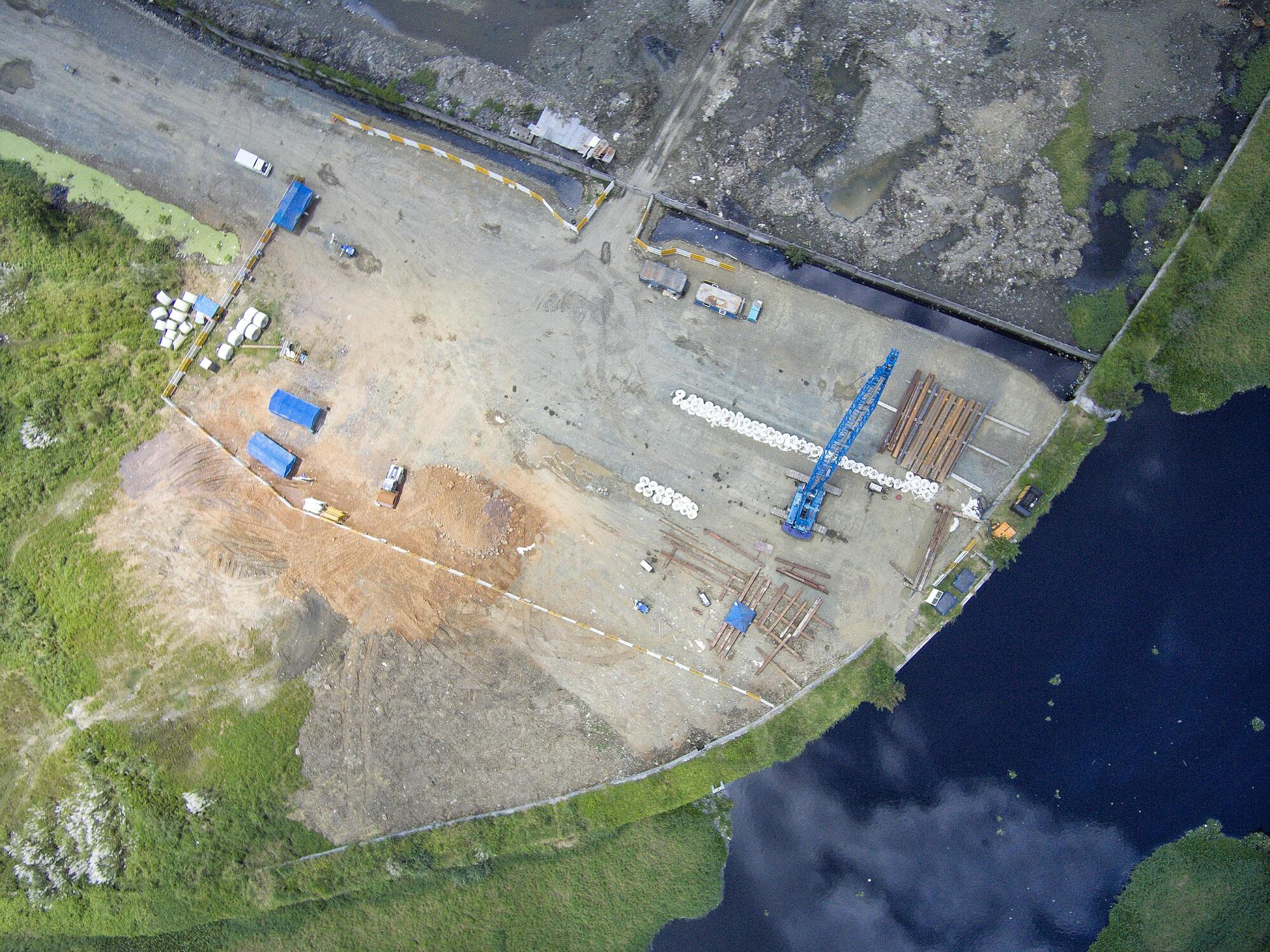
Land surveying is one of the most established and essential branches of the surveying profession in Malaysia. It provides the legal, spatial, and technical foundation upon which land ownership, property development, and national infrastructure depend. Whether for residential transactions, large-scale township planning, or public infrastructure projects, accurate land information is vital to preventing disputes, ensuring correct land registration, and supporting efficient development. This article explains the fundamentals of land surveying in Malaysia, focusing on boundaries, titles, coordinates, and the technologies used to deliver precise land measurements.
The Role of Land Surveyors in Malaysia
Licensed land surveyors operate within a regulated framework to ensure that cadastral information is accurate, reliable, and legally defensible. Their work supports:
- The issuance of individual and strata titles
- Land subdivision, amalgamation, and boundary adjustment
- Dispute resolution and verification of physical boundaries
- Mapping and geospatial data collection for planning agencies
- Engineering works requiring precise ground control
- National mapping and geodetic framework development
Without land surveyors, property transactions would lack certainty, land ownership records would be unreliable, and development projects would face significant legal risks.
Understanding Cadastral Boundaries
A cadastral boundary is the legally recognised line that defines the limits of a land parcel. In Malaysia, these boundaries are shown on Certified Plans (CP) and Registered Plans (RP), which are lodged with the Land Office and maintained as part of the national land registration system.
Surveyors determine boundaries by referencing:
- Historical survey plans
- Boundary markers (iron pegs, pipes, stones, concrete pillars)
- Bearings and distances recorded in earlier surveys
- Coordinate-based survey data
- Natural features where relevant
Because old survey data may predate modern equipment, surveyors sometimes face challenges such as missing markers, deteriorated monuments, or ambiguous measurements. Their role includes interpreting old records, verifying present conditions, and reinstating boundaries when necessary.
Land Titles and Their Survey Requirements
Land ownership in Malaysia is formally recognised through land titles such as:
- Freehold titles
- Leasehold titles
- Stratum titles (for underground or elevated parcels)
- Strata titles (for multi-level buildings)
Each type of title requires specific survey procedures and documentation.
Subdivision Surveys
When land is divided into multiple parcels, surveyors must measure and mark each parcel’s new boundaries. The resulting Certified Plans are essential for issuing new titles to landowners.
Amalgamation Surveys
This involves merging two or more parcels into a single lot. Surveyors verify existing boundaries, ensure that the merged parcel is contiguous, and prepare an updated plan.
Strata Surveys
These surveys define parcel boundaries within multi-storey buildings. Surveyors measure floor areas, accessory parcels, common property, and vertical/horizontal boundaries.
Title Conversion (e.g., from qualified titles)
Surveyors conduct field verification to ensure the plan corresponds to the actual ground situation before converting temporary titles into final titles.
Each of these processes forms part of a tightly controlled legal framework that ensures accuracy across Malaysia’s land registration system.
Coordinate Systems and Survey Datums
Malaysia uses several coordinate systems depending on survey vintage and region. The primary geodetic datum currently in use is GDM2000, which aligns with global reference frameworks and supports high-precision GNSS measurements.
Surveyors frequently work with:
- Cassini-Soldner coordinates — still found in many older land title documents
- Rectified Skew Orthomorphic (RSO) projection — used for topographical mapping
- Localised coordinate grids — relevant for older estates or pre-modern surveys
- GNSS-derived coordinates — increasingly common in engineering and cadastral surveys
Surveyors must understand how to convert between these systems, especially when referencing old plans or integrating legacy datasets into modern workflows.
Field Methods and Equipment Used in Land Surveying
Modern land surveying balances traditional methods with advanced technology.
1. Total Stations
Still widely used, these instruments provide angular and distance measurements with millimetre-level precision. They are ideal for boundary marking, construction setting-out, and site verification.
2. GNSS/GPS Receivers
Using satellite positioning, surveyors collect coordinate data for large sites or open areas. Real-Time Kinematic (RTK) and static GNSS methods allow high-precision positioning.
3. Drones and Photogrammetry
Aerial mapping allows surveyors to capture large areas quickly. Drone orthophotos and point clouds support land development planning, earthwork estimation, and preliminary cadastral verification.
4. Leveling Instruments
Essential for height measurement, especially on undulating sites or during road and drainage design.
5. Survey Software & GIS
Processing tools help integrate field data with cadastral databases, perform coordinate transformations, and generate accurate survey plans.
The combination of these tools enables surveyors to meet the increasing demands for accuracy, speed, and detailed reporting.
Boundary Markers and Their Importance
Boundary markers serve as the physical evidence of property limits. They may include:
- Iron rods or pegs
- Concrete boundary stones
- Steel pipes
- Masonry structures
- Old colonial-era markers
Surveyors must locate, verify, or reinstate these markers according to standards. Missing markers may require re-establishment using bearings from adjacent parcels or historical records.
Markers are essential during:
- Property transactions
- Construction planning
- Fencing or wall construction
- Dispute resolution
Improperly placed fences or walls can lead to legal complications, so accurate reinstatement is crucial.
The Legal Framework Governing Land Surveying
Land surveying in Malaysia is regulated through:
- National Land Code (NLC)
- Strata Titles Act
- Land Rules specific to each state
- Guidelines issued by JUPEM (Department of Survey and Mapping Malaysia)
JUPEM plays a central role in maintaining cadastral data, national geodetic frameworks, and certified plans. Their guidelines directly influence how surveys should be conducted and how data is submitted.
Jabatan Ukur dan Pemetaan Malaysia
Surveyors in Malaysia frequently refer to guidance and standards published by JUPEM (Jabatan Ukur dan Pemetaan Malaysia), the national authority responsible for cadastral mapping, geodetic controls, and survey regulations. JUPEM’s resources support consistent survey practices across the country and ensure that cadastral data remains accurate and legally reliable.
https://www.jupem.gov.my
The Growing Role of Technology
Digital transformation is reshaping land surveying. Cloud-based GIS, mobile mapping systems, LiDAR scanning, and automated drafting workflows are becoming mainstream. These technologies help:
- Reduce field time
- Improve measurement accuracy
- Provide richer spatial datasets
- Enhance integration across planning and engineering teams
Modern surveyors must be technologically proficient to remain competitive and meet industry expectations.
Conclusion
Land surveying is the foundation of secure land ownership, effective planning, and well-managed development in Malaysia. Accurate boundaries, up-to-date cadastral records, and reliable spatial data form the basis of a functioning property market and sustainable urban growth. As technology advances and the built environment continues to evolve, land surveyors will play an increasingly important role in supporting Malaysia’s development and safeguarding the integrity of land information systems.